

Regenerative healthcare connects the vitality of the soil with your diet and well-being.
We all know that eating a healthy diet is essential to staying well. Today, healthcare practitioners from many disciplines are going beyond simply urging patients to choose nutritious foods and are treating a wide range of ailments and chronic diseases with prescriptions for foods at their peak of nutrient density and raised without toxic chemicals—in other words, regenerative organic crops. Why is it necessary for doctors to prescribe food? What does it mean for you? How is Rodale Institute making a difference? Here’s what you need to know.
DIAGNOSIS
Obesity. About 40 percent of adults in the US are overweight enough to be classified as obese, says a report by the Centers for Disease Control. Obesity is a critical risk factor for type 2 diabetes, cardiovascular disease, and many other serious conditions. It is not just the by-product of an excessive abundance of food; households that are food insecure in the US are at a higher risk of obesity, because of the quality of food commonly available to low-income people.
Ultraprocessing. America’s top agricultural products—corn, soybeans, and wheat—are the raw materials of the industrial food system. They are used to make sweeteners, hydrogenated oils, refined flour, and other ingredients that fill you up but don’t nourish you. These ultra-processed foods make up more than 50 percent of the average American’s daily calorie intake.
Consumption of ultra-processed foods is responsible for an estimated 124,000 premature deaths yearly in the US, says a study published in the American Journal of Preventive Medicine in April 2025. “Ultra-processed foods increase our risk of morbidity [illness] and mortality [death] through two mechanisms: the impact of the foods themselves and the loss of benefits from other more nutritious foods that they replace in our diet,” says Meagan Grega, MD, a Pennsylvania physician who is certified in lifestyle medicine and has been a featured speaker at the Rodale Institute Regenerative Healthcare Conference.
Nutrient loss. Industrial agriculture emphasizes productivity over quality. An analysis of USDA nutrient content data from 1950 to 1999 for 43 crops (mostly vegetables) showed a decline in the concentrations of most nutrients, notably protein, calcium, iron, riboflavin, and vitamin C. During the same time period, grain yields more than doubled, and the protein concentrations in these crops declined significantly.
“Let food be thy medicine and medicine be thy food.”
—Hippocrates (400 BC)
PREVENTION
Life choice. Compared with the typical “Western diet,” the “optimal diet” has a higher consumption of whole grains, legumes, fish, fruits, vegetables, and nuts and fewer calories from red and processed meats, sugar-sweetened beverages, and refined grains,” Grega says. Citing a study based on the 2019 Global Burden of Disease study, she notes that eating the optimal diet starting at age 20 and sustaining that for a lifetime “may result in an additional 10.7 years of life expectancy for a woman and 13 more years of life expectancy for a man. Adopting an optimal diet at age 60 would still provide an impressive benefit, with an estimated 8 additional years of life expectancy for a person of either gender.”
Organic boost. Many studies have found that crops raised organically have greater concentrations of vital nutrients than conventional crops. A 10-year comparison at the University of California, Davis, for example, found that tomatoes grown organically were richer in anticancer flavonoids than the conventionally grown fruit.
INTERVENTIONS
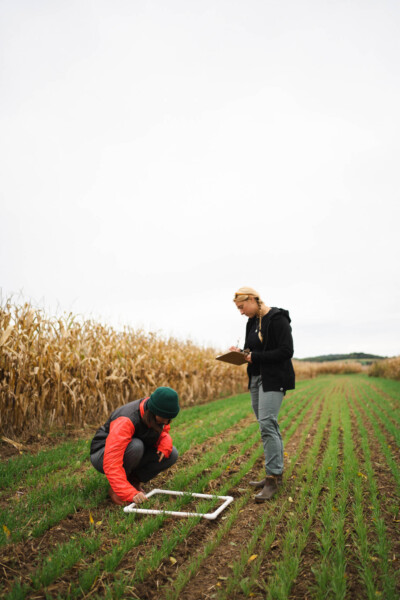
Soil power. Organically managed soils host higher levels of microbial diversity than conventionally managed soils do, and organically produced foods (compared with those produced conventionally) possess greater concentrations of bioactive phytochemicals. Rodale Institute’s Vegetable Systems Trial is exploring the connection between farming methods and the nutrient density of the harvested crops.
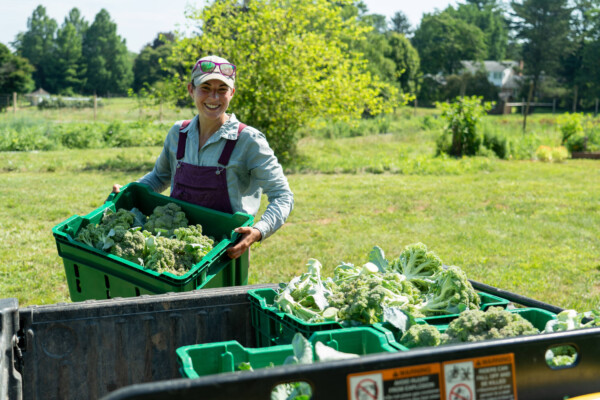
Serving communities. Rodale Institute plays a central role in bringing organic food to a hospital and two senior living communities. Since 2014, the St. Luke’s–Rodale Institute Organic Farm has been providing fresh, certified organic produce to patients and staff of the St. Luke’s University Health Network’s Anderson Campus in Easton, Pennsylvania. In 2023, the Cornwall Manor–Rodale Institute Trailside Organic Farm in Lebanon, Pennsylvania, produced 9,150 pounds of fresh food in its first full growing season for the residents of the retirement community. A new partnership with Phoebe Ministries at Rodale Institute’s Founders Farm in Allentown, Pennsylvania, was launched in 2025 to grow organic food for the senior populations of Phoebe’s sites in the state.
The three partnerships are bringing highly nutritious food to the people who need it most. These farms also serve as models to show other healthcare institutions how to connect with organic farmers and nourish their communities. Linking human health to the health of the soil—the founding principle and ongoing mission of Rodale Institute—is the key to reversing the rising tide of chronic, lifestyle-related diseases.
GATHERING FORCE
The annual Rodale Institute Regenerative Healthcare Conference brings together medical experts, researchers, farmers, and consumer advocates to share knowledge, propose solutions, and build connections to carry the benefits of organic food to all. “Regenerative healthcare aims to prevent disease and regenerate life through an organic, whole-foods, plant-forward diet that begins on farms that work in harmony with nature,” says The Power of the Plate, a 2020 report from Rodale Institute. “Regenerative healthcare harnesses the power of nutritious food and lifestyle to suspend, reverse, and prevent disease.”
This piece was originally published in the 2025 Rodale Institute Journal. Get the full issue here.