

As we kick off a new year here at Rodale Institute, we’re getting back to the basics. What is organic agriculture? What is regenerative? Why is organic agriculture worthwhile?
Here to answer all of your pressing questions about organic farming is our Southeast Organic Consultant, De’Anthony Price. So let’s start with the most basic question…
Rodale Institute (Q): What is organic agriculture in a nutshell?
De’Anthony Price (A): Organic agriculture is the production of food without synthetic inputs. Synthetic inputs include fertilizers, pesticides, and other synthetic materials. Organic farming focuses on working with natural systems rather than relying on chemically manufactured products.
Q: Why should farmers consider transitioning to organic or implementing regenerative organic practices? What are the benefits?
A: Studies have shown that when farmers use regenerative organic practices, they are creating a more holistic production system—one that can largely take care of itself over time. These practices improve soil health, promote environmental stewardship, and overall create a healthier food system. Farmers often save money by using these practices because, as soil health improves, reliance on off-farm inputs decreases. Healthier soils lead to stronger crops, fewer pest issues, and lower long-term input costs.
Q: What are the benefits of pursuing USDA Organic certification or Regenerative Organic Certification?
A: USDA Organic certification is the gold standard and often the starting point for farmers transitioning to organic production. Regenerative Organic Certification (ROC™) builds upon USDA Organic by placing a stronger emphasis on soil health, animal welfare, and social fairness. Becoming ROC™ certified allows farmers to show that they are part of a larger movement and committed to regenerative practices that go beyond the minimum organic requirements.
Q: What are some of the major considerations when choosing to farm organically? Transition time, paperwork, costs, challenges, etc.?
A: One of the biggest considerations is a mindset shift. Farmers move from thinking about growing against nature to growing with nature. Organic farming is about creating a long-term plan and committing to farming this way for the long haul. For USDA Organic certification, the transition period is usually 36 months, with some exceptions based on land history. Recordkeeping is a major part of certification because it verifies that farmers are actually practicing organically. The key is creating a recordkeeping system that works best for the farmer. Even beyond certification, good recordkeeping is a strong business practice.
Cost can be a challenge, as organic inputs often cost more than synthetic ones. However, there are programs available to help offset certification costs. The main goal is to build soil health, which typically takes 3–5 years. Over time, as soil health improves, farmers usually see a decrease in input costs. Organic farming can be more expensive on the front end, but it is a long-term investment and lifestyle that pays off over time.
Q: How do organic and conventional agriculture compare in terms of profit, yield, and stability?
A: Studies have shown that organic yields can be comparable to conventional yields over time, especially once soil health is built. In many cases, organic systems are more resilient to unpredictable weather because healthy soils manage water better, cycle nutrients more efficiently, and handle stress more effectively. Profits can increase due to the price premium for certified organic products, along with reduced dependence on costly synthetic inputs over time. Overall, organic systems are more resilient to climate change and future challenges because they are grounded in strong soil health, biodiversity, and diversified management practices that support long-term stability and farm viability.
Q: How does Rodale Institute support farmers in the transition to organic and regenerative organic production?
A: Rodale Institute offers a wraparound support system for farmers. The consulting team provides technical assistance to both transitioning and established organic farmers. The agronomy team supports farmers with agronomic guidance and organic certification, walking them through the entire process. In addition, the market team provides technical assistance related to market development, market access, and food system promotion. Together, these teams offer comprehensive support throughout the transition and beyond.
Q: How can consumers and the general public better support farmers, and specifically organic farmers?
A: Consumers can start by shopping local and buying directly from farmers whenever possible. Visiting farms, supporting their products, and building relationships with growers all make a big difference. With permission, consumers can also help by sharing farms and their products on social media and spreading the word. Purchasing certified organic products whenever possible also helps strengthen and grow the organic food system.
Q: Is there anything else that you think farmers should know about organic or regenerative organic agriculture?
A: Organic farming is truly what it’s meant to be—working with nature rather than against it and building resilient, adaptable systems rooted in long-term land stewardship. Farmers should know they are not alone in this process. Organizations like Rodale Institute, along with experienced farmers, are committed to sharing knowledge, resources, and real-world experience. Community is key. Learning from one another and supporting each other through challenges makes the journey more sustainable and rewarding. Organic farming is about the people, land, and the future we’re building together.
De’Anthony Price, Southeast Organic Consultant
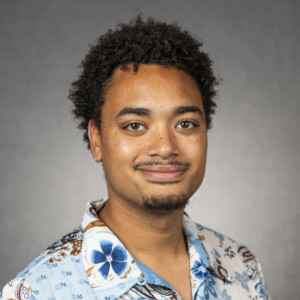
De’Anthony Price is an Agronomist specializing in sustainable and organic crop production, farmer education, science communication, and advocating for minorities in agriculture. As a native of Atlanta, Georgia, he deeply understands the significance of food production and environmental stewardship. Before joining Rodale Institute, De’Anthony served at UF/IFAS Extension Jefferson County as the Agriculture & Natural Resources Agent. There, he delivered educational programs on agriculture, horticulture, and natural resources, earning recognition for his expertise in organic and alternative farming systems.
De’Anthony holds a Bachelor of Science in Agricultural Communication from Abraham Baldwin Agricultural College, where his studies focused on supporting BIPOC (Black, Indigenous, and People of Color) farmers in the Southeast. He furthered his education at Alabama A & M University, graduating with a Master of Science in Plant and Soil Science, Agronomy in 2022. His research centered on nutrient management in sustainable and organic crop production, particularly in ethnic vegetables, medicinal plants, and specialty cropping systems. Beyond his professional pursuits, De’Anthony cherishes quality time with his wife and dog, and indulges in karaoke & camping.