

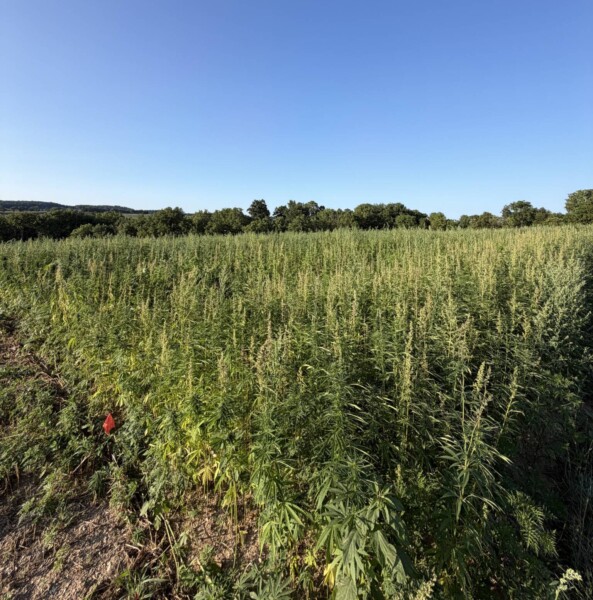
INDUSTRIAL HEMP IS RE-EMERGING AS A VALUABLE CROP. Since the 2018 Farm Bill opened the door to growing it as a mainstream agricultural commodity, farmers across Pennsylvania and beyond have been exploring hemp not just for fiber and CBD, but for its grain, a nutrient-dense seed packed with protein, healthy fats, and fiber. But growing hemp for grain well, consistently, and sustainably is still young in regenerative organic. Rodale Institute, a global leader in regenerative organic agriculture, is working with USDA’s Agricultural Research Service in Wyndmoor, to help answer some of the open questions.
Why This Research Matters
Hemp grain is not just another seed. It contains roughly 25% fatty-acid-rich oil, 27% protein, including eight of the essential amino acids the body needs daily, 22% fiber, 20% carbohydrates, and a range of essential minerals and vitamins. That rich nutritional profile is why interest in hemp grain has grown so quickly among farmers and food companies alike.
The difficulty is that yield and nutrient quality depend heavily on hemp variety, weather, and management, with reported yields ranging anywhere from a few hundred to well over a thousand pounds per acre. Right now, there’s very little research on one especially promising tool for improving those outcomes: cover crops.
Cover crops such as triticale and hairy vetch are well known for improving soil health by reducing erosion, storing carbon, suppressing weeds, and supporting beneficial soil microbes. By keeping the ground continuously rooted, they provide an ecological foundation for regenerative organic farming: fixing nitrogen, building organic matter, and strengthening the soil microbiome to improve climate resilience. What remains less clear is how these benefits affect the hemp grain crop that follows. Does soil enriched by cover crops lead to higher yields and more nutritious seeds?
What is Happening
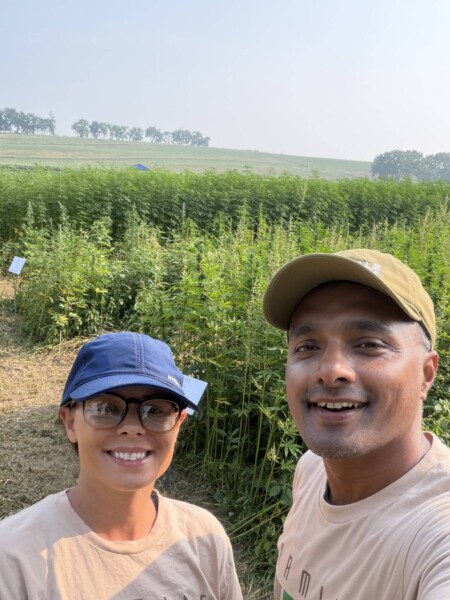
Researchers at Rodale Institute’s Kutztown, Pennsylvania campus are running a multi-year field trial to find out. The team is testing four cover crop treatments: no cover crop, triticale alone (a grass), hairy vetch alone (a legume), and a triticale–hairy vetch mixes ahead of planting two hemp grain varieties, i.e., CFX-2 and Indigo at rate of 40 pounds per acre. Each of the eight treatment combinations is replicated four times, in plots measuring 20 feet by 60 feet.
Beyond yield, the researchers are digging into what is happening at the root level, partnering with USDA-ARS to study arbuscular mycorrhizal fungi, a beneficial soil organism that helps plants pull in more nutrients and water. These fungi have already been shown to boost yields in other crops by around 15% on average, and emerging research suggests they may also increase levels of beneficial plant compounds. In an earlier Rodale Institute study, fiber hemp varieties showed strong fungal colonization in their roots, ranging from 37% to 54%, with the variety MS 77 showing the highest level, directing to real potential for improved nutrient uptake and stress resilience. Almost nothing is known about how these fungi interact with grain hemp roots, so this project is exploring additional territory.
The team will also analyze the harvested grain in detail, testing protein and amino acid content, fatty acid profiles, minerals, and even ergothioneine, a rare antioxidant amino acid linked to protection against Alzheimer’s disease that has never been measured in hemp grain.
Who Benefits
This research is designed with Pennsylvania’s specialty crop farmers in mind, including underserved and beginning farmers exploring hemp as a new enterprise. Project organizers estimate the work will reach around 500 growers and stakeholders through published findings, workshops, webinars, and hands-on demonstrations at Rodale Institute’s well-attended annual field days. The trial is now in its second year, and the team recently showcased its hemp varieties and management practices at the 2026 Organic Field Day, held on July 17, 2026, which attracted roughly 500 visitors.
“There is a real need for practical guidance on how to grow hemp grain successfully in organic systems,” said Dr. Dinesh Panday, Industrial Hemp Researcher and Soil Scientist at Rodale Institute. By testing management practices that are affordable and accessible, rather than relying on heavy synthetic fertilizer inputs, the team hopes to give farmers science-backed options that improve both their harvest and their soil.
Looking Ahead
Over the life of the project (2024-2027), Rodale Institute researchers will track soil nutrients, plant tissue chemistry, and root colonization by fungi across research plots, comparing outcomes across the four cover crop treatments and two hemp varieties. Results will be shared through field days, peer-reviewed and extension articles, and presentations at regional and global conferences.
The goal is straightforward: help farmers grow more hemp grain, with better nutrition, using practices that build up their soil rather than deplete it. As hemp continues to establish itself as a mainstream specialty crop, research like this lays the groundwork for a healthier, more resilient supply chain- from the soil all the way to the food on people’s plates.
—
This project is Funded by the U.S. Department of Agriculture and administered by the Commonwealth Specialty Crop Block Grant Program/ Pennsylvania Department of Agriculture.