

Saurav Das*, Said Hamido, Dinesh Panday
Email: saurav.das@rodaleinstitute.org
Over the last decade, soil health has moved from a niche conversation to a national and global movement. For much of the 20th century, the dominant framing on farms was soil fertility, nutrient supply and crop production (often simplified to “yield”). A major inflection point in the United States came during the Dust Bowl of the 1930s, when the combination of drought and intensive tillage exposed a hard truth: extractive farming methods can rapidly degrade soil structure and drive severe erosion. That crisis reshaped U.S. conservation policy. The Soil Conservation Act (April 27, 1935) created the Soil Conservation Service, the predecessor of today’s Natural Resources Conservation Service (NRCS), and made soil management a public policy issue, not only a farm management issue.
In the 1970s through 1990s, the predecessor of “soil health” was “soil quality.” The central question shifted from “How much yield can the soil produce?” to “How well can the soil perform functions over time?” Definitions began to converge on the idea that soil quality is the capacity of a soil to function within ecosystem boundaries, sustaining productivity while protecting environmental quality and supporting plant/animal health. This was an important cultural shift: soil was increasingly treated as a multi-functional system (water regulation, filtering, habitat, nutrient cycling), not just a growth medium.
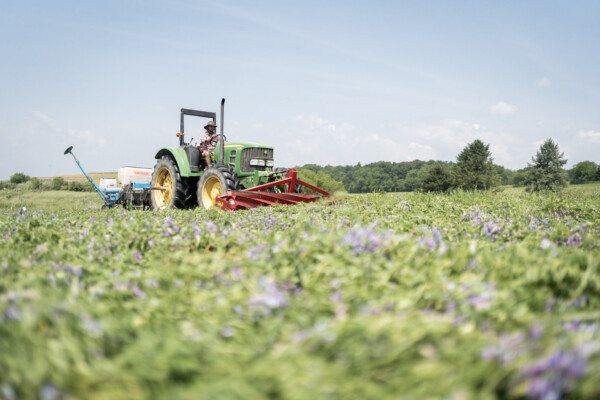
By the late 1990s and early 2000s, many researchers and stakeholders increasingly used the term soil health because it foregrounded soil as a dynamic, living system (microbes, fauna, roots, and organic matter cycling), rather than primarily a physicochemical medium. A widely cited milestone in this transition was the definition advanced by Doran and colleagues (1994), emphasizing soil health as the capacity of a living soil to function within ecosystem boundaries to sustain plant and animal productivity while maintaining or enhancing environmental quality.
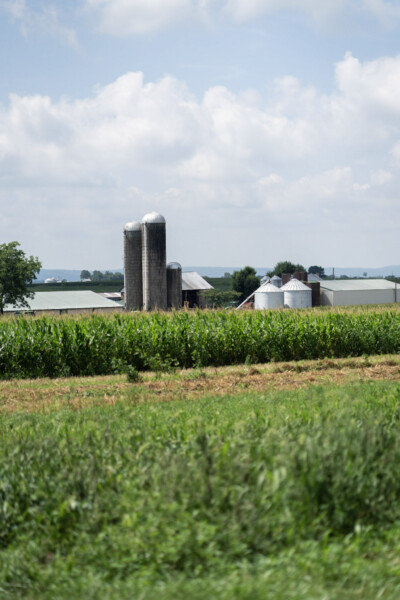
Soil Health Movement
The soil health movement was not triggered by one single issue. It grew because multiple land constraints became persistent and hard to ignore, such as erosion, topsoil loss, organic matter loss, compaction, salinization/acidification, and declining biological function in many landscapes. Global syntheses have reinforced the scale of the challenge, according to FAO ~33% of the global soil is degraded and that’s a substantial fraction of soils. This reinforced a key message; soil degradation is not a historical problem we solved; it is a continuing risk we manage.
On farms, soil health gained momentum because it began to translate into practical outcomes that farmers can see and feel. Improvements in soil structure can increase water infiltration, reduce runoff and ponding, improve rooting depth & nutrient use efficiency, and support more stable crop performance under variable weather. In many systems, these functional gains can also reduce costs over time by reducing input and improving resilience in extreme years.
At the same time, the movement expanded beyond the farm gate because the consequences of soil degradation do not stay on the farm. When soil and nutrients leave fields through erosion and runoff, the impacts show up downstream as water quality issues and community-level costs. This broadened the conversation: soil health became not only about farm performance, but also about environmental outcomes that affect people.
In the early 2010s, soil health also became increasingly tied to climate conversations. Soil holds significantly more carbon than the atmosphere combined, and soil management influences whether soils lose carbon or gain it over time. This created new interest in carbon markets, ecosystem service valuation, and broader sustainability accounting further moving soil health from a field-scale topic to a societal-scale discussion. The result is where we are today: soil health is increasingly viewed as a foundation for resilient agriculture, environmental protection, and long-term productivity measured not only by yield, but by function.
Principles of Soil Health Management and Practices
Soil health guidance is often summarized into four core principles, maximize living roots, minimize disturbance, keep the soil covered, and increase biodiversity, because these fundamental principles regulate the processes that drive soil function such as carbon inputs, aggregation, pore continuity (infiltration and aeration), and biological activity. However, soil responses are strongly controlled by agroecology (soil type, texture/mineralogy, drainage class, and climate). Therefore, this framework expands to six principles that better reflect (i) spatial heterogeneity and climate controls on soil processes and (ii) the co-management of plants and animals as coupled components of nutrient cycling and ecosystem function.
The Six Principles
-
- Keep living roots as continuously as possible to maximize rhizosphere carbon flow, sustain microbial activity, and support nutrient cycling.
- Examples: cover crops (grasses, legumes, brassicas); reduced fallow (double cropping, relay cropping, winter annuals); perennial phases (hay, pasture); living mulches (clover).
- Maintain protective soil cover using residues and cover crops to reduce erosion, buffer temperature, and limit evaporative moisture loss.
- Examples: residue retention; mulching; termination methods that retain surface biomass (roller-crimping, mowing, strip termination); erosion protection (windbreaks, buffer strips, contour strips).
- Minimize disturbance by reducing tillage and traffic and avoiding field operations under wet conditions, thereby protecting aggregates and macropore/bio-pore continuity.
- Examples: reduced-till, no-till and strip-till where feasible; controlled traffic; and avoiding heavy passes and soil disturbance when soil is wet and vulnerable.
- Increase functional biodiversity through rotations and cover crop mixtures that diversify rooting depth and architecture (annuals to perennials; fibrous roots to taproots/bio-tillers), strengthening structure and biological function.
- Examples: diversified rotations; multi-species cover crops and habitat diversification (prairie strips, hedgerows, pollinator borders).
- Integrate livestock where appropriate and well-managed using controlled grazing to recycle nutrients, stimulate plant regrowth, maintain cover, and improve resilience while avoiding compaction and overgrazing.
- Examples: rotational/adaptive grazing; grazing cover crops with residual targets; managed manure return aligned with timing and rate.
- Make management context-specific and adaptive by aligning practices with soil and climate capability, benchmarking against local references/targets, monitoring indicators, and adjusting management over time.
- Examples: soil testing and indicator tracking; weather-informed decisions; zone-based management (variable-rate amendments, soil-zone-specific cover crops and rotations).
- Keep living roots as continuously as possible to maximize rhizosphere carbon flow, sustain microbial activity, and support nutrient cycling.
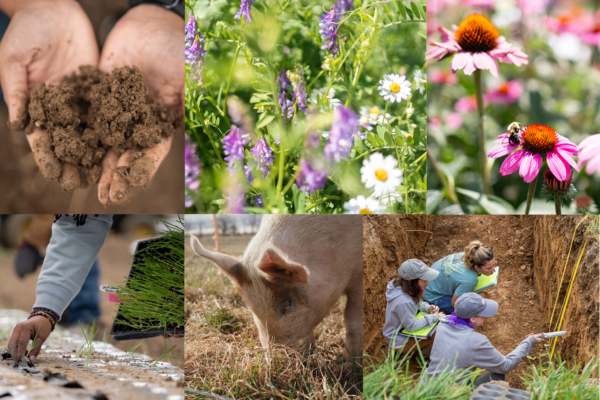
Measuring Soil Health on Farms: From Principles to Proof
Soil health improves when management changes translate into measurable gains in soil function, such as water retention capacity and storage, soil structure, nutrient cycling, and biological activity. The challenge is that soils do not respond uniformly. A practice that performs well on a well-drained silt loam may behave very differently on poorly drained clay or a drought-prone sandy soil. That is why soil health should be measured using repeatable indicators, sampled the same way over time, and interpreted against local context rather than a single universal benchmark.
A practical way to approach measurement is to think in two layers. The first layer is what you can learn quickly in the field, with low-cost tools and direct observation. These field indicators are useful because they diagnose constraints that farmers manage day-to-day runoff, crusting, compaction, shallow rooting, and poor drainage. Simple tests like infiltration can reveal whether rainfall is entering the soil profile or running off the surface. A basic slake or aggregate stability test shows how well aggregates resist breakdown, which is closely tied to crusting and erosion risk. Checking compaction with a probe (or penetrometer when soil moisture is consistent) helps identify traffic or tillage layers that restrict root growth and reduce water movement. Pairing these with quick estimates of soil cover, a shovel-based look at root depth and distribution, and periodic earthworm counts gives an early, practical picture of whether the soil is gaining function.
The second layer is lab testing, which provides the longer-term accounting needed to document change and guide decisions. The goal is not to run every test available, but to select a small suite that is consistent and decision relevant. Tracking soil organic matter and soil carbon helps quantify foundational trends, even though they change slowly. Including an early responsive indicator such as active carbon (e.g., POXC) often makes management impacts more visible in the short-to-medium term. Lab-based aggregate stability complements field observations, while bulk density helps track root limitations and changes in porosity over time. Biological indicators such as potentially mineralizable nitrogen (PMN) or soil respiration (depending on what your lab offers) add insight into nutrient cycling potential. Routine chemistry, pH and fertility (N, P, K, and micronutrients where relevant) remain essential because nutrient constraints can mask soil health gains or drive outcomes independently of structure and biology.
Measurement only becomes useful when sampling is consistent enough to interpret. The easiest way to lose clarity is to average across highly variable soils or change timing and depth each year. A better approach is to benchmark within soil zones, for example, sampling hilltops and toe-slopes separately or separating fields by soil type and drainage class. Sampling should be done at the same depth (for example, 0–6 inches or 0–12 inches) and at the same time of year (often post-harvest or pre-plant), because soil moisture and recent management can strongly influence results. Repeating the same locations using GPS points or fixed transects improves trend detection. And finally, interpretation depends on context, so it is worth tracking basic management metadata each year (crop history, cover species, termination method, tillage passes, manure/compost rates, grazing timing, and major weather events).
Farmers also benefit from knowing what to expect first. The earliest changes are usually functional rather than chemical. Within months to a year, you may see improvements in soil cover, surface structure, infiltration response, and in some cases earthworm activity, especially where crusting and runoff were major constraints. Over one to three years, improvements tend to become more consistent: aggregate stability increases, ponding and runoff decrease, rooting depth improves, and fields often become more traffic tolerant. The slowest changes are typically in total carbon stocks. Soil organic carbon increases and deeper structural shifts often require multiple years to a decade or more, depending on texture/mineralogy, drainage, climate, and the amount of biomass returned to the soil. The key is to measure across time, so progress is visible even when the most long-term indicators move slowly.
Regenerative Organic Agriculture and Soil Health
Regenerative organic agriculture is best understood as organic farming with an explicit soil health outcome goal. Organic production sets the baseline by defining the inputs and practices allowed for fertility building, such as crop rotations, cover crops, and organic nutrient sources (manure, compost), while avoiding synthetic inputs. The “regenerative” emphasis then pushes the system beyond compliance and toward measurable improvement in soil function: stronger soil structure and aggregation, better pore connectivity, and infiltration, more consistent nutrient cycling, and higher biological activity. In other words, regenerative organic is not a single practice. It is a system approach built around stacking practices that keep carbon flowing into soil biology and protect the physical structure where roots and microbes do their work.
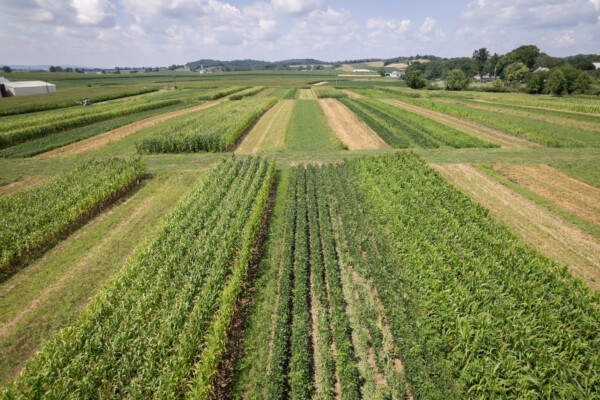
At Rodale Institute, regenerative organic agriculture is not treated as a concept alone; it is anchored in long-term research. The Farming Systems Trial (FST), established in 1981, is the longest-running side-by-side comparison of organic and conventional grain-based systems in North America. It was designed to answer farmer-relevant questions about performance, transition, and soil change over time, and it has become a living dataset on how management shapes soil, crops, and environmental outcomes across decades. Findings from the FST have repeatedly shown that organic systems can build soil organic matter and biological function and improve soil physical properties such as aggregate stability and infiltration, changes that matter directly for drought buffering, runoff reduction, field access, and long-term resilience. In addition, FST results have often shown that organic yields can be competitive with conventional yields in typical years and may perform particularly well under extreme weather conditions (~31% higher yields in drought years), reinforcing the idea that soil health is a foundation for yield stability, not only yield potential.
Future of Soil Health
Soil health is no longer just an agronomic concept; it is becoming a decision framework that links on-farm management to economic performance, human well-being, and ecosystem outcomes. Farmers have always cared about soil because it determines productivity, trafficability, and risk under weather extremes. What is changing is the scale of attention and the expectation of proof. As conservation programs, supply chains, and public investments increasingly ask, “what outcomes improved,” soil health is moving toward measurement credibility, comparability, and functional interpretation, not just practice adoption.
A major shift underway is the integration of soil health with economics and risk. The most durable economic value of soil health often comes less from chasing maximum yield and more from buffering downside risk: fewer ponded acres, fewer replant events, more workable days, and more consistent yield under drought or intense rainfall years. This “risk-reduction economics” is also the bridge to community benefits, less sediment and nutrient loss, lower flood risk, and improved water quality. In that sense, soil health is increasingly treated like farm and community infrastructure; it reduces volatility and protects productivity while also lowering off-site costs that are increasingly visible to the public and policymakers. A recent economic analysis by Soil Health Institute across 100 farms in Midwest have found, on average increase of $52 per acre for corn and $45 per acre of soybean from adoption of soil health practices.
Soil health is also being pulled into broader discussions of ecosystem service valuation. When soils capture rainfall instead of shedding it, retain nutrients instead of exporting them, and build stable organic matter instead of losing it, the benefits extend beyond the field boundary. This is where soil health begins to intersect with market and policy tools, including cost-share, payments for ecosystem services, and emerging environmental accounting frameworks (carbon credits). The opportunity is real, but it creates a requirement: ecosystem services must be tied to soil function with defensible measurement and transparent uncertainty. That is why the “future of soil health” is increasingly a measurement and attribution problem: linking management → soil process change → measurable soil function → ecosystem outcome.
To make that linkage credible, the field is moving toward a minimum, harmonized indicator suite, fewer tests, and better interpretation. The likely direction is not a universal “soil health score” that ignores agroecology, but a compact set of indicators that represent (i) physical structure and hydrology, (ii) carbon status, and (iii) biological activity, paired with basic soil context (texture/mineralogy, drainage) so results are interpretable across regions. A practical minimum set often looks like a structural/hydrologic indicator (such as infiltration or aggregate stability), a carbon indicator (soil organic matter), and a biological cycling indicator (respiration), along with bulk density/compaction where root restriction is common. The point is not to test everything; it is to repeatedly test a small set that explains function and responds to management.
The most important scientific evolution ahead is better functional understanding, moving beyond “soil health goes up” to “which function improved, by how much, and what outcome should change next?” Farmers already think this way; infiltration matters because it reduces water logging, provides better planting windows, reduces drought stress, and erosion. Aggregate stability matters because it affects crusting, emergence, and sediment loss. Biological activity matters because it affects nutrient cycling timing and nitrogen-use efficiency. The future will formalize this functional logic so that soil health interpretation becomes more predictive.
Further Readings
- Soil Health and Sustainability: Managing the biotic component of soil health: https://doi.org/10.1016/S0929-1393(00)00067-6
- Reference site selection based on state-and-transition models for soil health gap evaluation within cropland reference ecological units: https://doi.org/10.1016/j.soisec.2024.100142
- Cover crop selection tool: https://covercroptool.midwestcovercrops.org/
- Soil Health Gap: https://doi.org/10.1016/j.gecco.2020.e01116
- Cropland Reference Ecological Unit: https://doi.org/10.1016/j.ecolind.2022.109468
- Soil Health Cycle: https://doi.org/10.1002/agg2.20504
- Minimum Soil Health Indicator: https://doi.org/10.1016/j.soisec.2023.100084
- Economy of Soil Health (100 Farm Report): https://soilhealthinstitute.org/our-work/initiatives/economics-of-soil-health-systems/
- Soil Health Economics (Case Studies): https://farmlandinfo.org/publications/soil-health-case-studies/