

Kansas Wesleyan University Farmer Training Program
Jumpstart your career in regenerative organic agriculture with an immersive school led by some of the world’s leading regenerative organic experts.
Kansas Wesleyan University’s (KWU) Community Resilience Hub (CRH) and Rodale Institute proudly partner to offer the Heartland RIFT Program, an immersive farmer-training experience designed to build a more resilient, sustainable agricultural future in the Central Plains.
This program is ideal for aspiring farmers, land stewards, and career-changers — especially those interested in livestock management and integrating animals into regenerative organic systems.
The Basics
The Heartland RIFT school at Kansas Wesleyan University is an eight-month, full-time hybrid experience that combines classroom instruction, farm visits, and hands-on training in the skills needed to operate a certified regenerative organic farm. All classes taken are college level, and students will receive 12 college credits upon completion of the program. Students will be immersed in the day-to-day work of a full growing season while also providing classroom lectures from experts in regenerative agriculture. Participants gain practical experience in planting, harvesting, soil care, pest management, and animal husbandry, with livestock integrated as a key part of the curriculum.
Students also receive extensive education in agricultural budgeting, marketing, and the financial foundations required to start or manage a profitable farm business. Designed for individuals with little-to-no farming experience, the program equips graduates with the knowledge and confidence to begin careers in regenerative organic agriculture.
Why This Program Is Perfect for Future Livestock Managers
Regenerative organic farming is inseparable from responsible animal stewardship. The Heartland RIFT Program provides deep, hands-on livestock experience, making it the ideal choice for anyone who wants to work with (or eventually raise) animals as part of a holistic farming operation.
You will gain practical, daily experience in:
- Animal husbandry and care practices
- Integrating livestock into crop rotations
- Understanding animal impact on soil health
- Pasture management and grazing systems
- Holistic land stewardship informed by livestock behavior
These skills are core to the program — not optional or peripheral.
What Sets the Heartland RIFT Program Apart
The Community Resilience Hub at KWU is a hub for environmental leadership and sustainable farming innovation. Its work includes:
- Leading regenerative organic farming research
- Supporting food security initiatives
- Offering an Environmental Justice minor
- Hosting environmental literacy and civil discourse programs
- Creating a campus climate action plan
If you’re interested in livestock, sustainability, food systems, or environmental advocacy, the CRH offers a natural home for your passions.
Student Tracks
Students
(8 months)
Intended for individuals who are seriously considering regenerative organic agriculture as a career, specifically those interested in livestock management and integrating animals into regenerative organic systems. Students will receive firsthand experience on basic farming skills for an entire growing season, as well as time in the classroom for more in-depth discussions around agriculture.
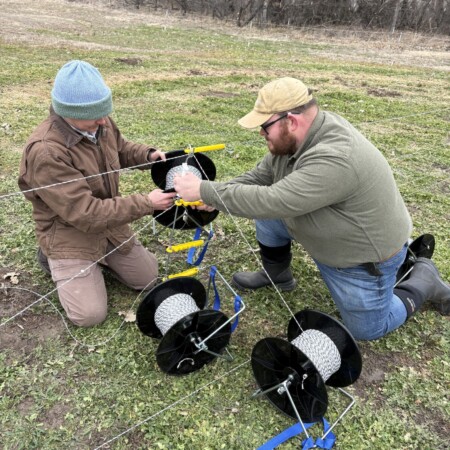
Field tasks will include growing and maintaining vegetables, grains, fruits, and a small number of livestock for integrating into crop fields.
Students will receive 12 college credits upon completion of the course. You will be required to attend all classroom sessions and off-site farm visits, complete all classroom assignments, and pass all quarterly exams to graduate.
Broader Training Context & Partnership
- Only about 1% of U.S. acreage is organically certified, and 95 million acres of farmland are poised to change hands in the next decade. The organic sector is a ~$70 billion industry and growing. With nearly 20 million Regenerative Organic Certified® acres, the time is ripe for the next generation of regenerative organic farmers.
- Rodale’s training programs encompass more than just RIFT: there are internships, workshops, webinars and additional training programs aimed at launching or refining a career in organic agriculture.
- The partnership with Kansas Wesleyan University’s CRH: The Community Resilience Hub at KWU launched the RIFT program in Salina, Kansas in spring 2025, positioning the program for those passionate about sustainable agriculture, including those transitioning into regenerative practices or starting small farms.
- Specific classes listed by KWU’s CRH include: Introduction to Regenerative Agriculture; Agricultural Humanities; Soil Science; Horticulture & Agronomy; Animal Husbandry; Entomology & Pest Management; Holistic Farm Management; Food Handling & Farm Safety; Technical Skills; Understanding the Unique Trauma & Mental Health Needs in Agriculture; Agriculture & the Environment.
- KWU also offers related academic pathways: a minor in Environmental Justice; a minor in Environmental, Sustainability and Resilience Studies; and a 3+2 Environmental Management Master’s Degree Program (liberal arts undergraduate at KWU plus Master in Environmental Management at another institution).
Apply Today
Please contact RIFT@rodaleinstitute.org, jacob.millerklugesherz@kwu.edu, or andrew.hall@kwu.edu with any questions.
All qualified applicants will receive consideration for employment without regard to race, color, religious creed, ancestry, national origin, age, sex, sexual orientation, sexual identity or handicap.
Apply Now